
Had Reflux After Eating? Here's What to Write Down Before Blaming the Food
Had reflux after eating and not sure what caused it? Learn what to write down after a reflux flare-up so you can spot possible patterns without blaming one food too quickly.
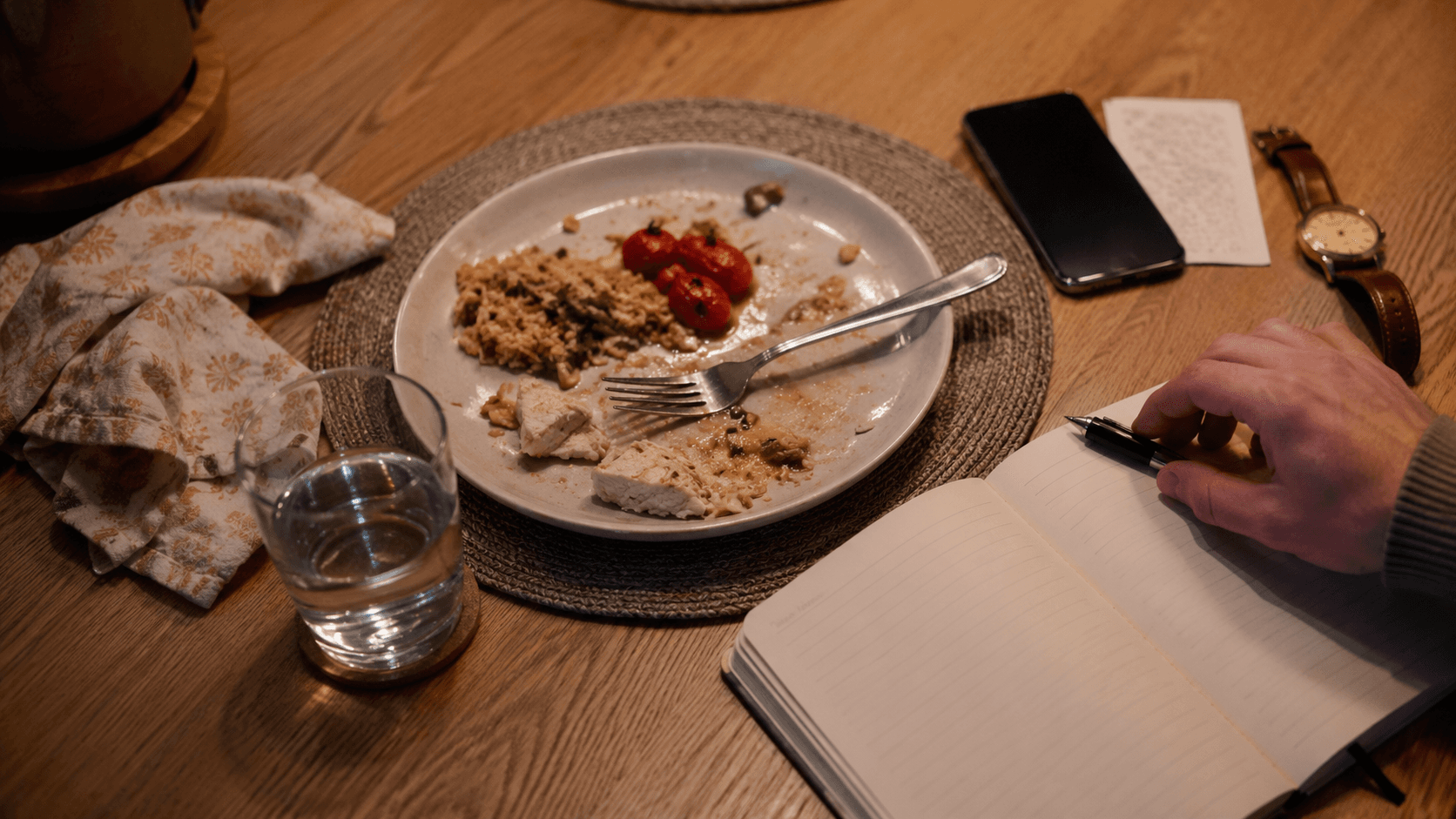
You finish dinner, clean up, and try to move on with your night. Then the burning starts. Maybe it comes with a sour taste in your mouth, pressure in your chest or throat, throat irritation, or the feeling that food is coming back up.
The symptom is uncomfortable. The guessing can be even more frustrating. You start replaying the meal: the sauce, the portion, the late dinner, lying down too soon, the stress of the day. Any of those details might matter, but one uncomfortable episode usually does not prove that one food is the problem.
A better first step is to capture enough of the moment that you can compare it later.
You do not need to log everything
A reflux flare-up can make you feel like you need to become a detective. You could track every ingredient, every sip, every minute, every symptom, every stressor, and every sleep detail. Most people cannot keep that up. And if logging becomes overwhelming, it stops being useful.
You do not need a perfect reflux diary. You need a short note that helps future-you understand what happened. A useful reflux note usually answers five questions:
- What did I eat and drink?
- How much did I eat?
- When did I eat, and when did symptoms start?
- What did the symptoms feel like?
- What else was going on around the meal?
That is often enough to turn a vague memory into something you can compare.
Why one reflux flare-up does not prove one food caused it
It is easy to think, "I ate this meal, then I had reflux, so this meal caused it." Sometimes a food or drink may be part of the pattern. But reflux symptoms are not always that simple.
Certain foods and drinks may worsen reflux symptoms for some people, including acidic foods, alcohol, chocolate, coffee or caffeine, high-fat foods, mint, and spicy foods, according to the NIDDK. But that does not mean every person with reflux has the same triggers. (NIDDK)
Timing can matter too. For people who notice reflux at night or when lying down, the NIDDK notes that eating at least three hours before lying down or going to bed may improve symptoms. Mayo Clinic also includes waiting before lying down, eating slowly, and noticing personal food or drink triggers in its GERD lifestyle guidance. (NIDDK, Mayo Clinic)
That is why the best note is not just "tomato sauce gave me reflux" or "spicy food is bad." A better note captures the full situation: the food, the amount, the timing, the symptoms, and the context.
What to write down after a reflux flare-up
1. What you ate and drank
Start with the main parts of the meal. You do not need a perfect ingredient breakdown. Just capture enough detail that you would recognize the meal later.
For example, "rice, grilled chicken, tomato stew, sparkling water" is much more useful than "dinner."
If something was different from the usual version of the meal, include that too. Maybe the sauce was spicier. Maybe the meal was heavier than usual. Maybe you had coffee, alcohol, chocolate, mint, citrus, or a high-fat meal.
These details are worth noticing, but they should not become automatic evidence that a food is "bad" for you. A common trigger list can be a starting point. Your own repeated pattern matters more.
2. How much you ate
You do not need exact measurements. A rough portion note is usually enough.
You might write: normal portion, larger than usual, heavier than usual meal, went back for seconds, late snack after dinner, or felt very full afterward.
This matters because the same meal can feel different depending on portion size, timing, and context.
3. When you ate and when symptoms started
Timing is one of the most useful details to capture because it helps you compare episodes later.
Write down when you ate, when symptoms started, and whether symptoms showed up quickly, hours later, overnight, or the next morning. Also note whether you lay down soon after eating, especially if nighttime reflux is part of your pattern.
A useful note might be: "Ate around 8:45 pm. Lay down around 10. Symptoms started around 11:30."
That gives you much more to work with than "reflux at night."
4. What the symptoms felt like
Try to describe the symptom, not just the label.
Instead of only writing "reflux," you might write "burning in chest," "sour taste," "food coming back up," "throat irritation," "coughing," "nausea," or "woke up with symptoms."
Then add a rough intensity. It can be as simple as "mild," "annoying but manageable," "6 out of 10," or "strong enough to keep me awake."
This is not about writing a medical report. It is about helping future-you remember what actually happened.
5. What else was going on around the meal
This is where many reflux notes miss useful context.
Ask yourself: Did I eat quickly? Did I lie down soon after eating? Was the meal later than usual? Was this a restaurant meal, travel day, party, or unusual routine? Was I unusually stressed? Did I sleep poorly the night before? Did I have alcohol or caffeine? Was I wearing tight clothing? Did I take any new medication or supplement?
Mayo Clinic's appointment-prep guidance recommends writing down symptoms, possible triggers, medications and supplements, key medical information, and recent stressors before discussing GERD symptoms with a clinician. That does not mean every detail caused the flare-up. It means these details can make your own pattern review, or a clinician conversation, more specific. (Mayo Clinic)
If you are using Flourish, this is the kind of context you can keep alongside your meal and symptom logs instead of trying to remember it later.
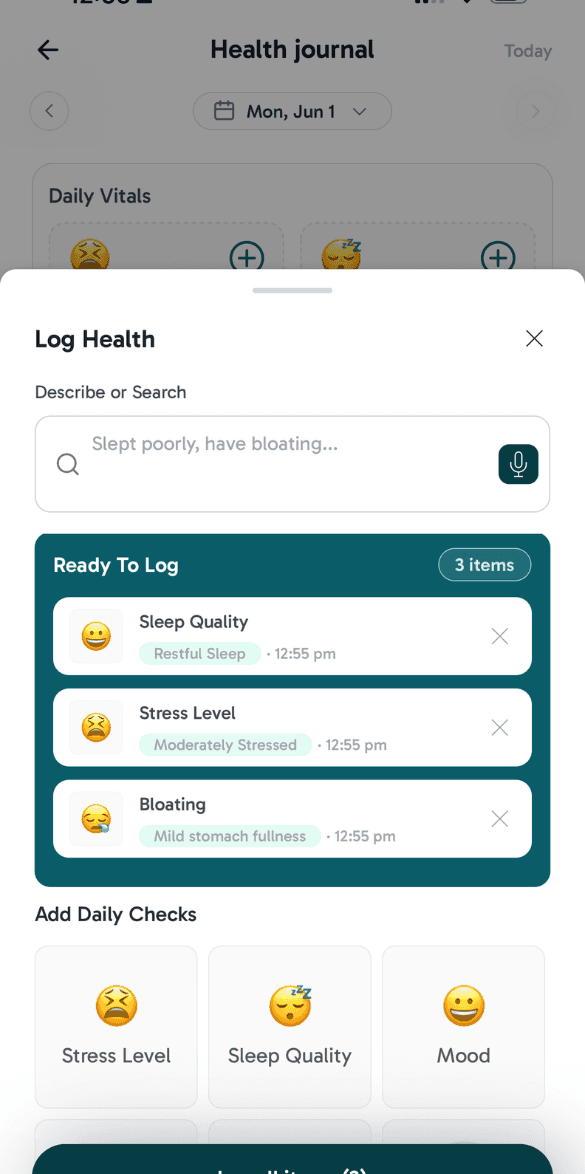
A good reflux note can be short
A useful note does not need to be long. It just needs to be specific.
For example:
"Chicken stew with rice, medium-large portion. Ate around 8:45 pm. Lay down around 10. Burning and sour taste around 11:30, 6/10. Stressful day. Similar symptoms happened once before after a late dinner."
That note captures the meal, portion, timing, symptom, and context. It also avoids jumping straight to a conclusion. That is the difference between a random bad night and a pattern you can actually review.
What not to do after one reflux flare-up
First, try not to immediately cut out the food forever. One uncomfortable episode is a clue, not proof. A review on lifestyle management of GERD notes that population studies do not support blanket long-term elimination of commonly implicated foods, and recommendations remain individualized. (Newberry & Lynch)
A better question is: "Does this keep happening in a similar pattern?"
Second, do not make logging so detailed that you cannot keep doing it. The best log is the one you can actually repeat when real life is messy.
Third, do not use tracking as a substitute for medical care. Tracking can help you organize details. It does not diagnose GERD, prove a trigger, or replace a qualified clinician.
When reflux symptoms should not be "just something to track"
Some symptoms deserve medical attention, not just a better note.
Consider talking with a qualified clinician if your symptoms are severe, persistent, worsening, unusual, or concerning. This is especially important for symptoms such as chest pain, trouble swallowing, vomiting blood or material that looks like coffee grounds, red or black stools, unexplained weight loss, or symptoms that disrupt daily life.
The American Gastroenterological Association lists alarm symptoms such as chest pain with activity, unintentional weight loss, choking while eating or trouble swallowing, vomiting blood or material that looks like coffee grounds, and red or black stools as reasons to talk with a health care provider right away. (AGA GI Patient Center)
If something feels serious or different from your usual symptoms, do not try to solve it with food tracking alone.
How Flourish can help you move from guessing to next steps
This is where the earlier logging pieces start to come together. Food reactions are hard to understand when the details live in scattered notes, memory, screenshots, and guesses. You may remember that reflux happened, but forget what time you ate, how much you had, what was in the sauce, whether you lay down afterward, or whether the same pattern has happened before.
Flourish is built for that gap between "something happened" and "I know what to do next."
You can log a meal with a photo or description, and Flourish turns that meal into a trigger-aware reflection: a trigger score, an explanation of what may have contributed to that score, and practical next steps to consider. That might mean a gentler swap, a recipe idea, a meal-planning adjustment, or a grocery list that makes the next food decision easier.
If symptoms show up later, you can log what you felt, when it happened, and what else was going on. Over time, those meal, symptom, and health-context logs can help you notice possible patterns instead of trying to reconstruct everything from memory.
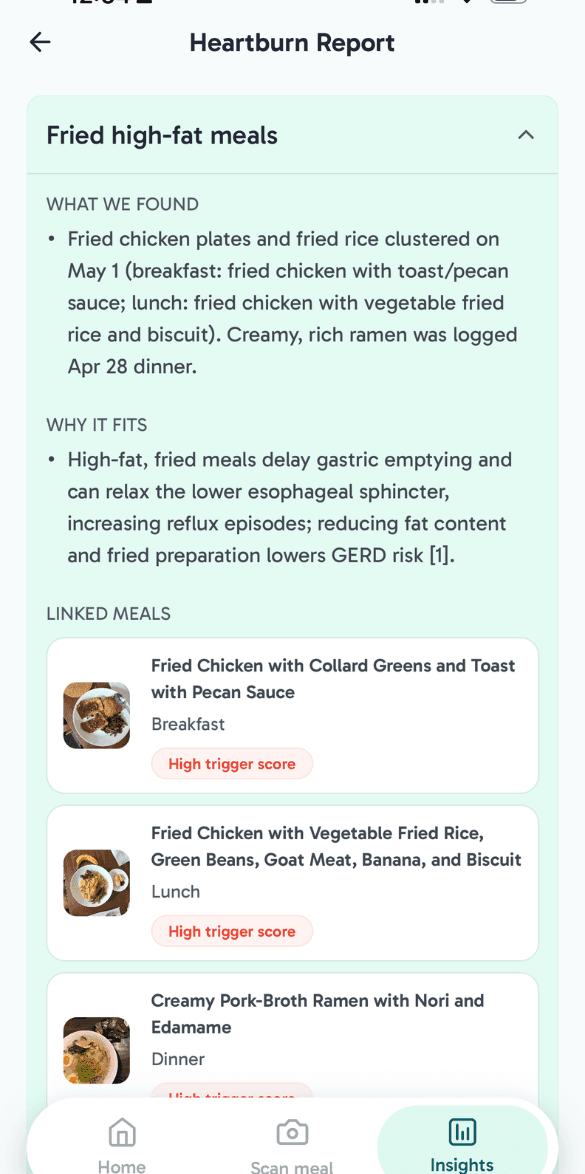
Flourish is not a diagnosis tool, and a trigger score does not prove that a food caused your reflux. But it can help you review meals with more context, see why parts of a meal may have been flagged, and decide what to try next with less guessing.
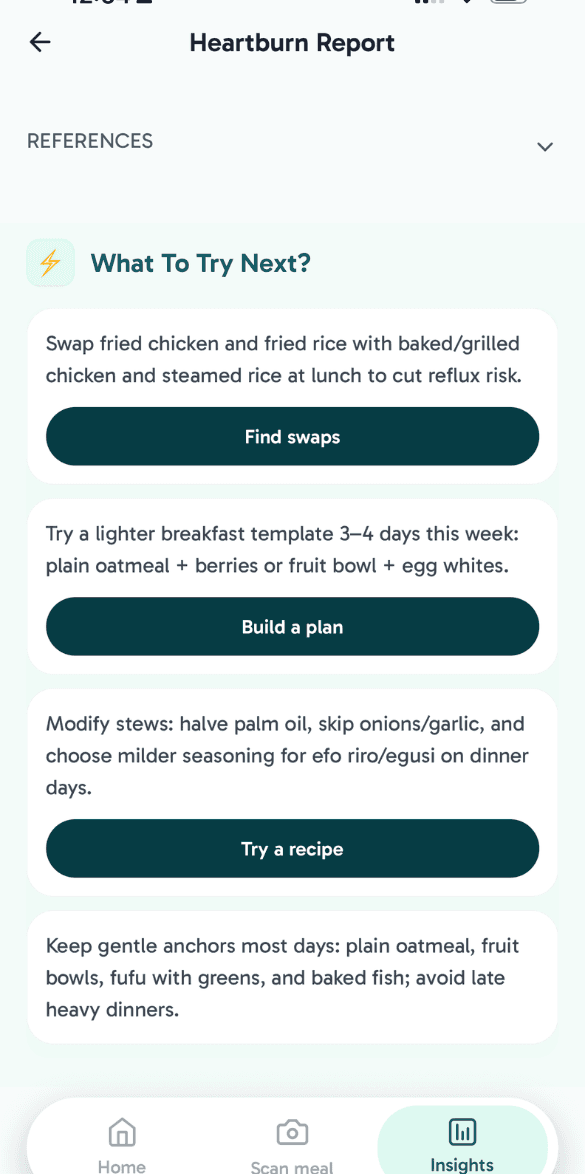
You can also talk with Flora, the AI nutrition companion inside Flourish, to review confusing meals or symptoms and think through practical next steps.
If you are tired of replaying meals in your head after reflux symptoms, Flourish can help you capture the meal, review possible trigger factors, and turn that information into practical next steps.
Final takeaway
After a reflux flare-up, you do not need to know the answer immediately. You just need to capture enough of the moment that you are not starting from scratch next time.
Food. Portion. Timing. Symptoms. Context.
That is often enough to turn a frustrating episode into something you can learn from.
Educational note: This article is for educational purposes only and is not medical advice. Flourish is not a diagnosis or treatment tool. If your symptoms are severe, persistent, worsening, unusual, or concerning, consider talking with a qualified clinician.