
Why Do I React Differently to the Same Meal on Different Days?
Ate the same meal twice and felt fine once but miserable the next time? Learn why context like portion, timing, stress, recent symptoms, and what else was in the meal may change how food feels.
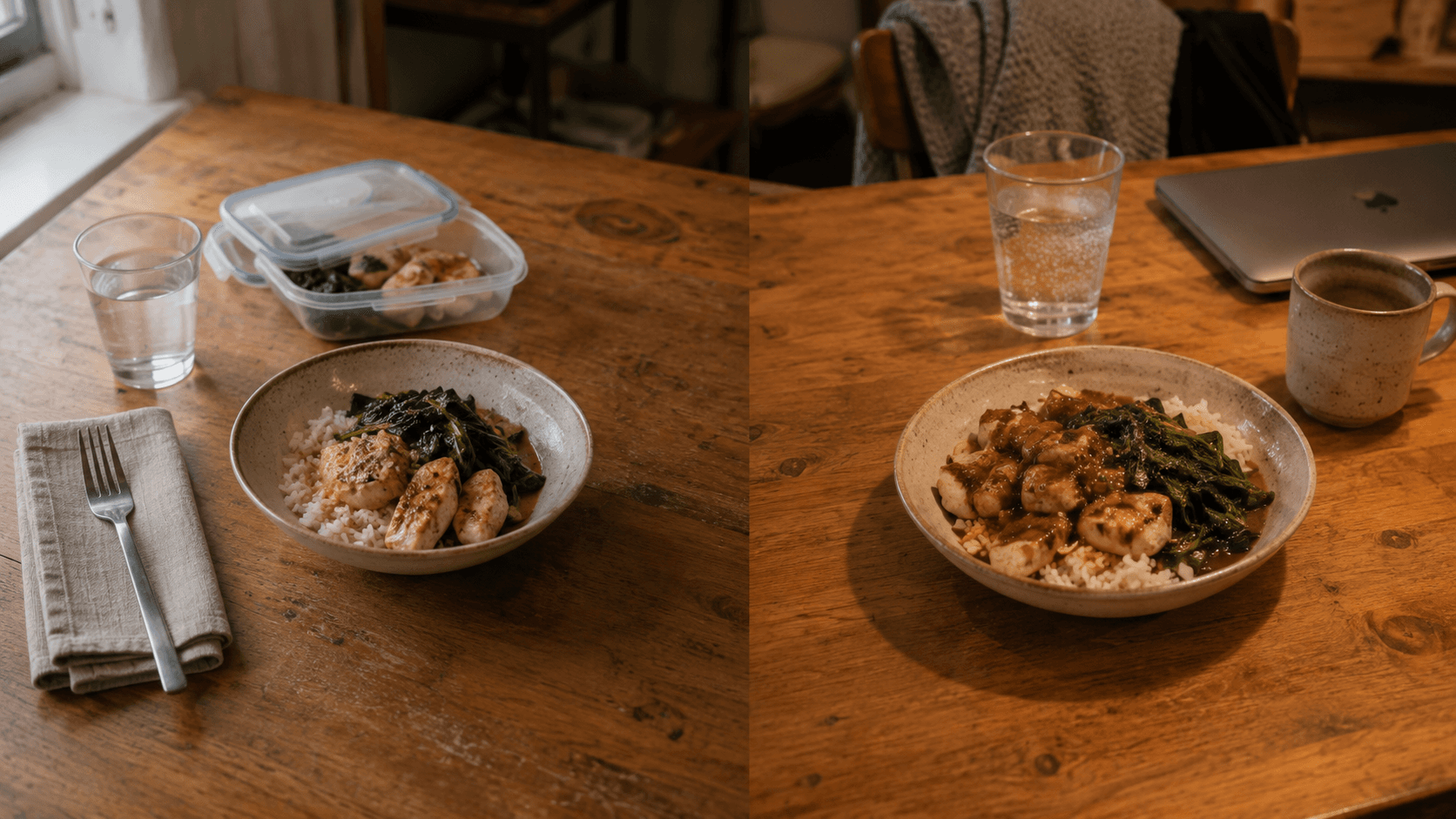
You ate the same lunch twice.
Same rice. Same chicken. Same vegetables. Same sauce.
The first time, you felt fine. The second time, you were bloated for hours, uncomfortable after dinner, or wondering why your reflux showed up when the meal looked no different from the one that worked last week.
That is the kind of reaction that makes tracking feel almost useless. If the same meal can lead to two different outcomes, what are you supposed to learn from the log? Was the food a trigger? Was it not a trigger? Did you miss an ingredient? Is your body just being random?
That does not mean the meal log is useless. It may mean the food is only one part of the pattern.
The meal is only one part of the pattern
Food matters. Ingredients can matter. Portion size, fat content, caffeine, carbonation, spice, and fermentable carbohydrates may affect symptoms for some people.
But your body is not responding to a meal in a vacuum. It is responding to that meal in the context of the whole moment: how much you ate, when you ate, what else was in the meal, what you ate close to it, how stressed you were, and whether your digestion already felt off before the first bite.
That is one reason the same meal can feel different on different days. It does not prove the food was harmless one day and harmful the next. It means the meal may be one clue inside a larger pattern.
The NIDDK notes that IBS symptoms may come and go, and that different factors may contribute for different people. It also notes that doctors look for symptom patterns over time when evaluating IBS. That is the right mindset for this problem: not "one meal proves the answer," but "what pattern keeps showing up when I compare meals, symptoms, and context?"
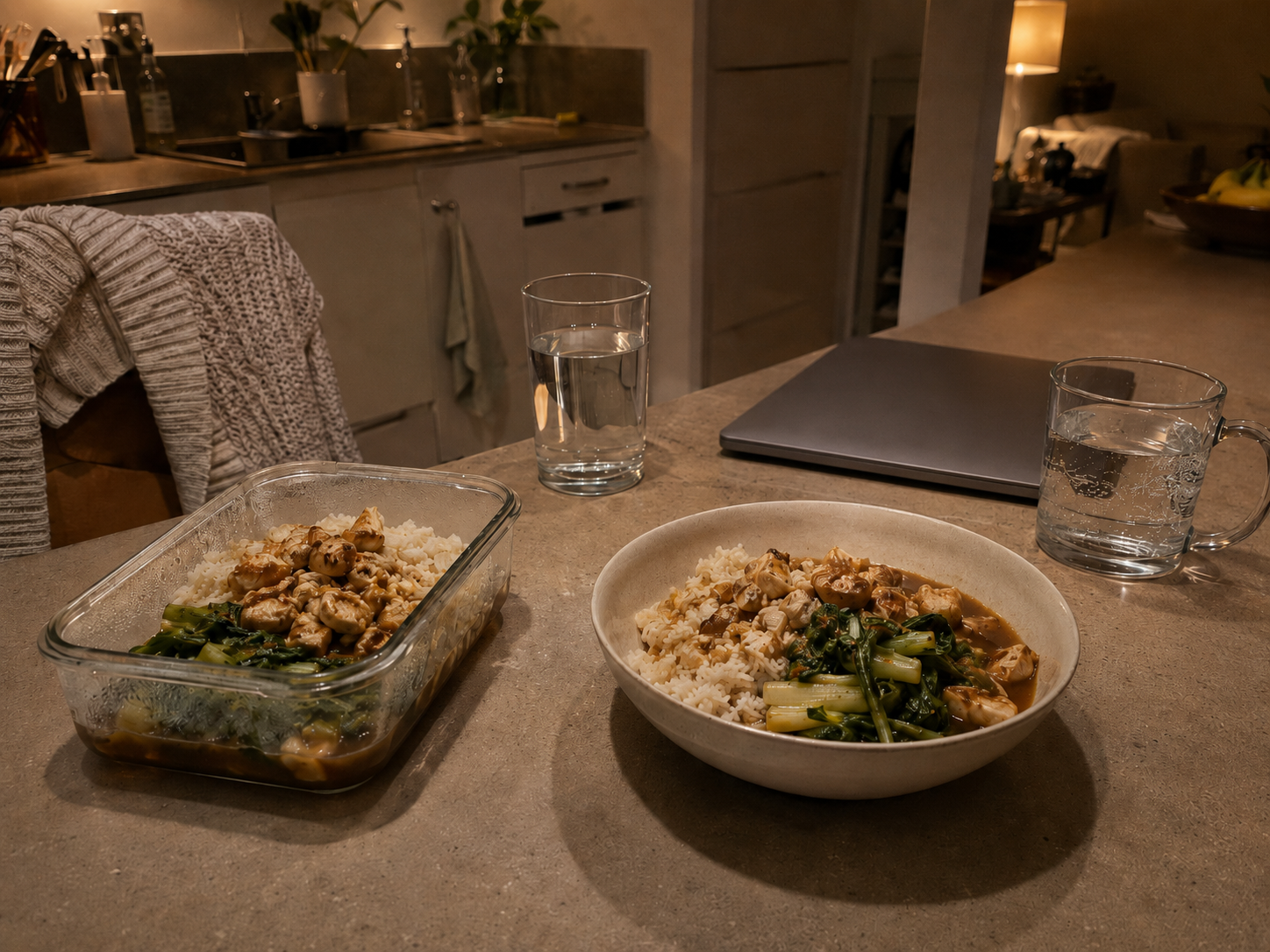
6 reasons the same meal can feel different
1. The portion was not actually the same
Two meals can look similar but land differently because the amount changed.
Maybe the second serving was larger. Maybe there was more sauce, more oil, more cheese, more beans, more onion, or more volume overall. For some people, the question is not only "what did I eat?" but also "how much of it did I eat?"
This is why "I ate the same thing" sometimes needs one more detail: "Was it the same portion?"
2. The timing was different
A meal at 1 PM and the same meal at 9 PM are not always the same experience.
Timing can matter especially for reflux-prone readers. The NIDDK says that for people with GERD symptoms at night or when lying down, eating meals at least 3 hours before lying down or going to bed may improve symptoms. NIDDK also notes that some people with GERD find certain foods or drinks trigger symptoms or make symptoms worse.
So if the same pasta bowl felt fine at lunch but uncomfortable after a late dinner, the difference may not only be the pasta. It may be the timing, the portion, what you did afterward, or the fact that your body was already having a rougher day.
3. What else was in the meal may have changed the total load
Most people do not eat isolated ingredients. They eat mixed meals: grains, proteins, vegetables, sauces, drinks, sides, snacks, and toppings.
That can make trigger tracking harder. A meal that seems familiar may still be different if the sauce changed, the portion changed, or several harder-to-tolerate ingredients were eaten together.
Monash University FODMAP explains that FODMAP stacking refers to symptoms possibly occurring when multiple FODMAP servings are consumed in one sitting or meal, and that individual FODMAP tolerance thresholds vary. Monash also says there is no need to worry about stacking if symptoms are well controlled.
That caution matters. The goal is not to make you afraid of combining foods. The goal is to notice whether a reaction seems tied to one ingredient, the portion, the full meal, or a pattern that repeats across similar meals.
4. Stress may change how your gut feels
Stress does not mean symptoms are "in your head." It also does not mean stress is always the cause.
But for some people, stress and anxiety may be part of the digestive context. Monash notes that not all IBS triggers are diet or FODMAP-related, and that for some people IBS may be more sensitive to non-dietary factors such as stress and anxiety.
That can make the same meal feel confusing. A burrito bowl on a calm Saturday may not feel the same as a burrito bowl eaten between meetings, during a tense week, when your stomach already feels unsettled.
The meal may not have changed much, but the day around it did.
5. Non-FODMAP food factors may matter for some people
Sometimes a food can be low in one trigger category and still not feel good.
Monash notes that some foods and drinks that are not high-FODMAP may still aggravate symptoms for some people with IBS, including coffee, alcohol, fatty foods, carbonated drinks, and spicy foods. That does not mean everyone needs to avoid those foods. It means the "same meal" question sometimes needs more detail.
Was there more oil this time? More spice? A carbonated drink with it? Coffee right before it? A richer sauce than usual?
Those small differences may be easy to miss when you are only logging the meal name.
6. Your symptom baseline was already different
A meal eaten during a calm week may not feel the same as a meal eaten after several days of bloating, constipation, diarrhea, reflux, nausea, or poor appetite.
This is one of the most overlooked parts of food tracking. If your digestion already felt off before the meal, the food may get blamed for a reaction that was already building. That does not mean the food was irrelevant. It means the meal happened on a different baseline.
This is also why one reaction should not automatically turn a food into a permanent "bad food." A single bad day is a clue. A repeated pattern is more useful.
Why food-only tracking can make symptoms look random
Imagine two logs:
Meal 1: Chicken, rice, greens, sauce. Felt fine.
Meal 2: Chicken, rice, greens, sauce. Felt bloated.
If that is all you track, the result looks random. There is nowhere else for the explanation to live.
Now imagine the second log also says: larger portion, late dinner, higher stress, richer sauce, symptoms already started earlier that afternoon. That still does not prove what caused the bloating, but it gives you a better record to review.
That is why food-only tracking can make symptoms look random, while context tracking gives you a better record to compare later.
The question becomes less "Should I cut out this meal forever?" and more "What was different this time, and does that pattern repeat?"
What to log when the same meal feels different
You do not need to write an essay after every meal. You just need enough detail to make future-you less confused.
The next time the same meal feels different, try noting:
- What did I eat?
- How much did I eat?
- What time did I eat?
- What else was in the meal?
- Did I eat or drink anything close to it?
- Was I already having symptoms before the meal?
- Was I unusually stressed?
- Did I lie down soon after eating?
- Did I eat quickly or feel rushed?
- When did symptoms start?
- How intense were they?
- Has this happened with the same meal more than once?
The most useful question is not always "What should I eliminate?" Sometimes it is "What pattern am I actually seeing?"
How Flourish can help
This is one place Flourish can be useful.
Flourish helps you log meals, symptoms, and health context in one place, so you can compare more than ingredients. You can capture what you ate, what you felt, when symptoms showed up, and what else was going on that day, then look for possible patterns over time.
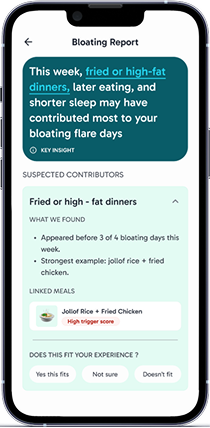
It is not a diagnosis tool. It does not prove that one food caused one symptom. But it can help you stop relying on memory alone, especially when your reactions feel inconsistent.
You can also ask Flora, the AI nutrition companion inside Flourish, to help you review a confusing reaction, compare it with recent logs, and think through what may be worth noticing next. The goal is not to hand you another generic trigger list. The goal is to help you learn from your own meals, symptoms, and routines.
If you are tired of guessing, Flourish can help you track meals, symptoms, and health context in one place.
When to talk to a clinician
Tracking can help you prepare better notes, but it is not a substitute for medical care. If your symptoms are severe, persistent, worsening, unusual, or concerning, consider talking with a qualified clinician.
That is especially important if you have chest pain, trouble swallowing, repeated vomiting, blood in stool, black stool, unexplained weight loss, fever, severe or worsening abdominal pain, signs of dehydration, fainting, allergic reaction symptoms, or symptoms that keep disrupting daily life.
Educational note: This article is for educational purposes only and is not medical advice. Flourish is not a diagnosis or treatment tool. If your symptoms are severe, persistent, worsening, unusual, or concerning, consider talking with a qualified clinician.