
Bloating After Eating Healthy? Here’s Why That Can Happen
Bloated after salads, beans, vegetables, or other healthy foods? Learn why this can happen, what may be worth tracking, and how to notice your own food and symptom patterns.
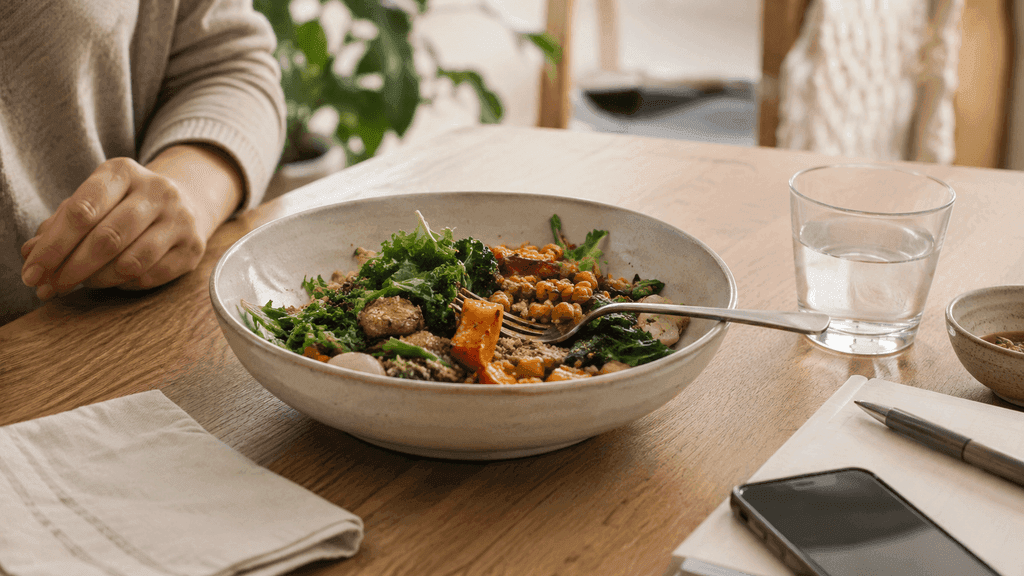
You made the salad.
Maybe you added leafy greens, chickpeas, quinoa, roasted vegetables, avocado, fruit, or a smoothie on the side. It looked like the kind of meal everyone tells you to eat when you are “being healthy.”
Then, an hour or two later, your stomach felt tight, swollen, gassy, or uncomfortable.
That can feel confusing. You tried to make the “right” choice, but your body still seemed unhappy.
Bloating after eating healthy foods does not automatically mean healthy eating is bad for you. It does not mean your body is broken. And it does not mean you need to start cutting out every food that makes you nervous.
Sometimes, the issue is more personal than “healthy” or “unhealthy.”
Healthy foods can still be harder to digest
A food can be nutritious and still feel uncomfortable for some people.
Beans, lentils, fruits, vegetables, and whole grains can all be part of a balanced diet. But they may also increase gas or bloating for some people, especially when eaten in larger amounts or added quickly after a lower-fiber routine.
Mayo Clinic notes that certain high-fiber foods may increase gas, including legumes, fruits, vegetables, and whole grains. Mayo also notes that fiber is still important for digestive health, even though it can increase gas production for some people. (Mayo Clinic)
That is the nuance that often gets lost.
The food is not automatically “bad.” Your body may just need more context than a generic healthy eating rule can provide.
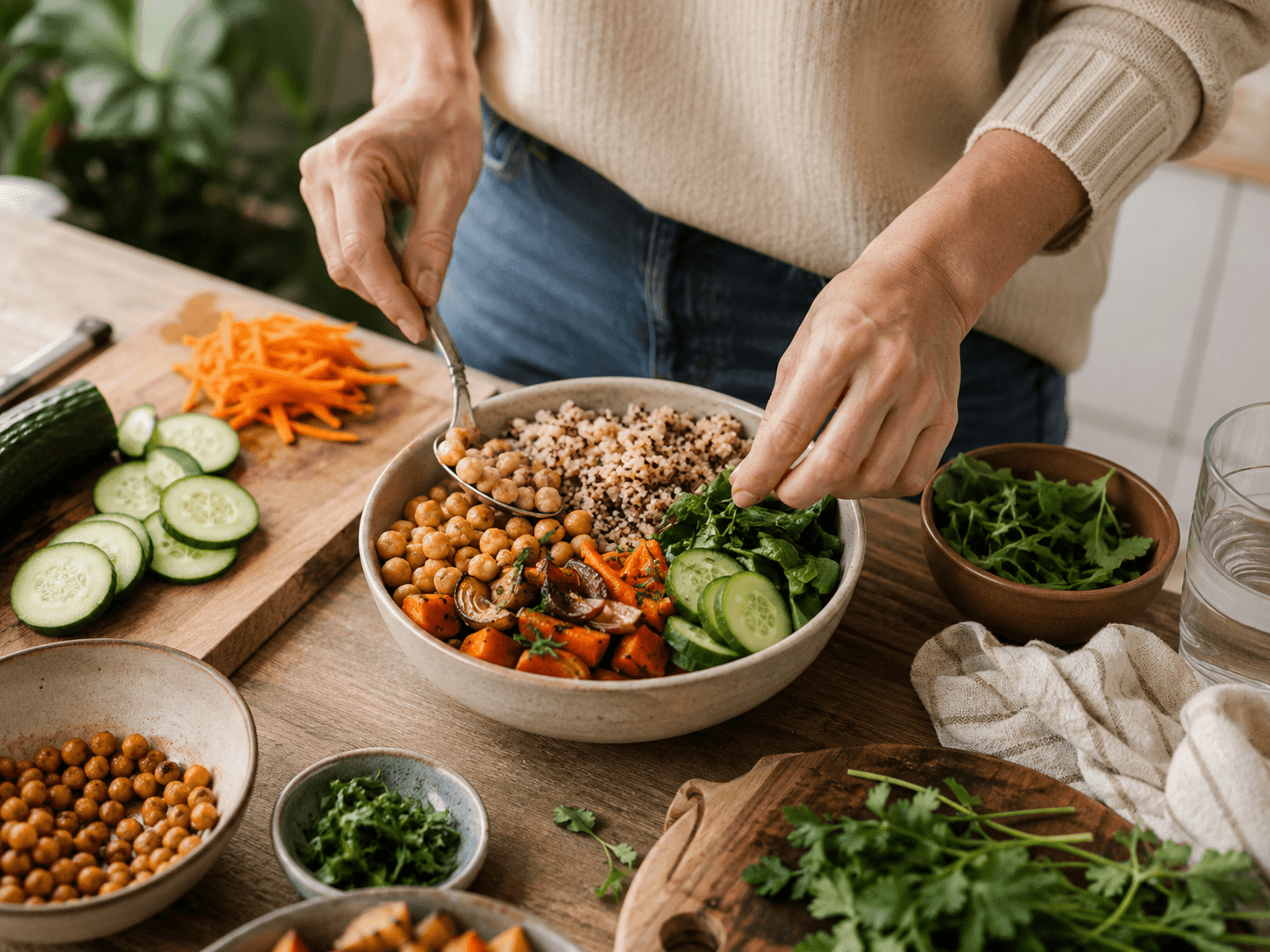
A big salad may feel different from a small side salad. Lentils at lunch may feel different from lentils at dinner. A smoothie with fruit, seeds, protein powder, and added fiber may feel different from a simple bowl of berries.
It may be fiber, fermentable carbs, or portion size
One reason some foods lead to gas is that certain carbohydrates are not fully digested before they reach the large intestine. When bacteria in the large intestine break down those undigested carbohydrates, gas can form, according to the NIDDK. (NIDDK)
This can happen with foods many people think of as healthy, including some fruits, vegetables, beans, and whole grains. (NIDDK)
For some people, especially people with IBS-style symptoms, fermentable carbohydrates known as FODMAPs may also be part of the picture. Monash University explains that FODMAPs are found in a wide range of foods, including fruits, vegetables, grains, nuts, legumes, lentils, dairy foods, and manufactured foods. (Monash FODMAP)
That does not mean everyone with bloating should start a low-FODMAP diet. The American College of Gastroenterology describes the low-FODMAP diet as a structured process with elimination, reintroduction, and personalization phases, often best done with professional guidance. (American College of Gastroenterology)
For most people reading this, the first step is simpler: notice patterns before making big restrictions.
Sometimes it is not just the food
It is tempting to blame one ingredient.
The chickpeas.
The kale.
The apple.
The oats.
But bloating can depend on more than one food. Mayo Clinic notes that gas can also be related to swallowed air, carbonated drinks, eating quickly, drinking through a straw, chewing gum, candies, and some sweeteners. (Mayo Clinic)
So if you felt bloated after a healthy lunch, the meal itself may only be one part of the story.
It may be worth asking:
-
Was this a larger portion than usual?
-
Was this more fiber than you normally eat?
-
Did you eat quickly?
-
Did you drink sparkling water or soda?
-
Did the meal include sweeteners or added fiber?
-
Were you stressed, constipated, or eating on the go?
-
Has this same meal caused bloating before?
Those questions do not prove what caused the bloating. But they can help you build a better picture over time.
Before you cut out another food, look for the pattern
One reaction does not prove a food is a trigger.
If you bloat after a grain bowl once, that does not automatically mean quinoa is a problem. If a smoothie makes you uncomfortable one morning, that does not mean fruit is the issue. If beans bother you after a large serving, a smaller portion may feel different.
Instead of jumping straight to restriction, try writing down a few details:
-
What did I eat?
-
How much did I eat?
-
When did bloating start?
-
How intense was it?
-
How long did it last?
-
What else was going on that day?
-
Has this happened with the same food before?
NIDDK notes that clinicians may ask people to keep a diary of foods, drinks, and gas symptoms to help understand whether certain foods or drinks may be connected to symptoms. (NIDDK)
The goal is not perfect tracking. It is simply to give yourself more context than memory can usually hold.
When to get support
Bloating is common, but it should not always be brushed off.
Consider talking with a qualified clinician if your symptoms are severe, persistent, worsening, unusual, or disrupting your daily life. NIDDK recommends talking with a doctor if gas symptoms bother you, change suddenly, or happen with symptoms like abdominal pain, constipation, diarrhea, or weight loss. (NIDDK)
Tracking can be helpful, but it is not a replacement for medical evaluation when symptoms are concerning.
How Flourish can help you stop guessing
Food reactions can be hard to understand when you are relying on memory alone.
Flourish helps you log meals, symptoms, and health context in one place, then look for possible patterns over time. You can track what you ate, how you felt, when symptoms showed up, and what else was going on around the meal.
Flourish is not a diagnosis tool, and it does not replace medical care. But it can help you move from “I have no idea what happened” to “Here are the patterns that may be worth noticing.”
You can also ask Flora, the AI nutrition companion inside Flourish, to help you review confusing meals, think through recent logs, and explore practical next steps like meal ideas, recipes, meal planning, or grocery lists.
The goal is not to make food more restrictive.
The goal is to make your own patterns easier to see.
The takeaway
Bloating after eating healthy foods does not mean healthy eating is not for you.
It may mean your body needs more context than a generic food rulebook can give you.
A meal can be nutritious and still be harder to tolerate in a certain portion, at a certain time, or in a certain combination. The next step is not always cutting out more foods. Sometimes, the better next step is noticing what keeps repeating.
If you are tired of guessing, Flourish can help you track meals, symptoms, and health context in one place so you can start noticing your own patterns.
Educational note: This article is for educational purposes only and is not medical advice. Flourish is not a diagnosis or treatment tool. If your symptoms are severe, persistent, worsening, unusual, or concerning, consider talking with a qualified clinician.